Textile Recycling Solutions from a Single Source
Carbios, based in Clermont-Ferrand, France, is one of the technological pioneers in plastic and textile recycling. The company develops enzyme-based processes to break down polyester-containing waste into its original raw materials, enabling true circularity within the textile industry. However, between vision and industrial reality lies a key challenge: the reliable processing of complex textile waste streams.
Textile Shredding at Carbios in France
In this project, WEIMA implemented a fully integrated turnkey solution for textile recycling, including shredding, separation, and material preparation. At the heart of the process is the powerful WEIMA WLK 1500 single-shaft shredder.
The system processes polyester-based textile waste from both post-consumer and post-industrial sources, delivering consistently high output quality for downstream recycling operations. Developed in close collaboration with project partners, the solution is designed for maximum efficiency, reliability, and scalability.
Innovative recycling process for PET textile fibers
The initial situation was far from simple: both post-consumer textiles and post-industrial production waste are processed — materials that differ significantly in composition, density, contamination levels, and the proportion of impurities such as metals or hard components. Carbios uses enzymatic depolymerization, in which optimized PET depolymerases break down polyester and other PET waste into their monomers. These monomers can then be repolymerized into new PET or polyester yarn, regardless of color or origin and without prior sorting. For this innovative downstream enzymatic recycling process, however, one thing is essential: a defined, homogeneous, and contaminant-free input material.


Turnkey textile size reduction
This is precisely where it became clear that a multi-stage processing approach was indispensable — from shredding and metal separation to fine separation. Individual machines were able to cover isolated process steps, but only the coordinated interaction of several stages enables a stable and continuous overall process.


Other suppliers could only provide individual components – whereas WEIMA implemented the complete line. The collaboration was very constructive and enabled us to further develop the technology. In addition, we are now convinced of the scalability of the process.


WEIMA is the system provider for constantly high material quality
Carbios specifically searched for a solution capable of delivering more than isolated process steps. The requirements included reliable size reduction to defined target particle sizes, effective removal of contaminants, and a clear perspective for industrial scalability — ideally all from a single source.
The answer was a fully integrated turnkey system from WEIMA. At the center of the solution is the WEIMA WLK 1500 single-shaft shredder, which efficiently and consistently shreds the textiles as the core preprocessing step. Building on this, a coordinated process chain consisting of a magnetic separator, non-ferrous separator, and zig-zag classifier ensures the targeted removal of metals and contaminants. The result is a homogeneous, clean material — the essential foundation for stable downstream recycling processes.
More Than Individual Machines: A Complete Working Solution
One key advantage lay in WEIMA’s approach: instead of simply supplying individual machines, the entire process was considered holistically. From the very beginning, WEIMA — supported by NCA Europe, the official sales and service partner for France — accompanied the project throughout every stage. This included initial material tests, the joint design of the processing line, and the integration of all components, even beyond WEIMA’s own technologies. Installation and commissioning of the complete system were also part of the scope of supply.


The project clearly demonstrates that efficient textile recycling is not achieved through individual machines alone, but through the intelligent integration of all process steps. With WEIMA as a system supplier, Carbios was able to gain control over complex material streams, ensure consistently high material quality, and take the next decisive step toward industrial scalability. Only through the coordinated interaction of shredding, separation, and process control can heterogeneous textile waste be transformed into a reliable recyclable material.
Our recommended favorites for textiles shredding
-
WLK 1500
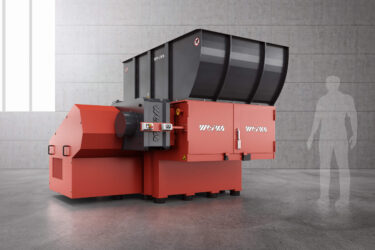
Single-shaft shredder
The tried-and-tested with a working width of 1,500 mm
Explore Machine -
W5.18
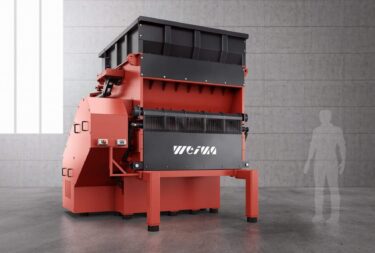
Single-shaft shredder
Low-maintenance all-rounders with a 500 mm rotor diameter
Explore Machine -
W8.30 PowerLine
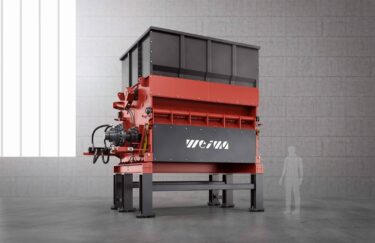
Single-shaft shredder
Universal production machine with a working width of 3,000 mm
Explore Machine -
WLK 1000
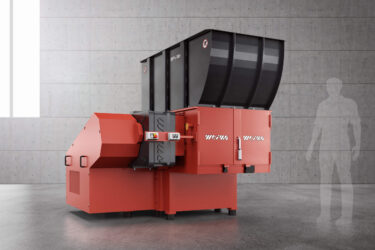
Single-shaft shredder
Cost-effective compact machine with a working width of 1,000 mm
Explore Machine -
WLK 800
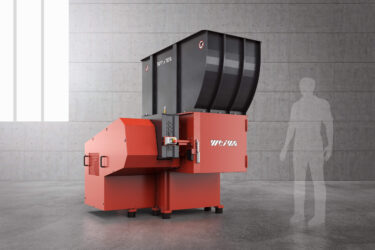
Single-shaft shredder
Cost-effective compact machine with a conveyor belt cut-out
Explore Machine