At the Zittau/Görlitz University of Applied Sciences, an interdisciplinary team has been working for almost twenty years on breaking down plant biomass into valuable components. With the NFK Recycling Project, researchers are focusing on natural fiber-reinforced plastics (NFRP), which are primarily used in lightweight construction in the automotive sector. Since conventional recycling processes reach their limits here, the consortium consisting of the Zittau/Görlitz University of Applied Sciences, the TU Dresden, WEIMA and Maschinen Schmidberger is jointly developing an innovative, recyclable plant.
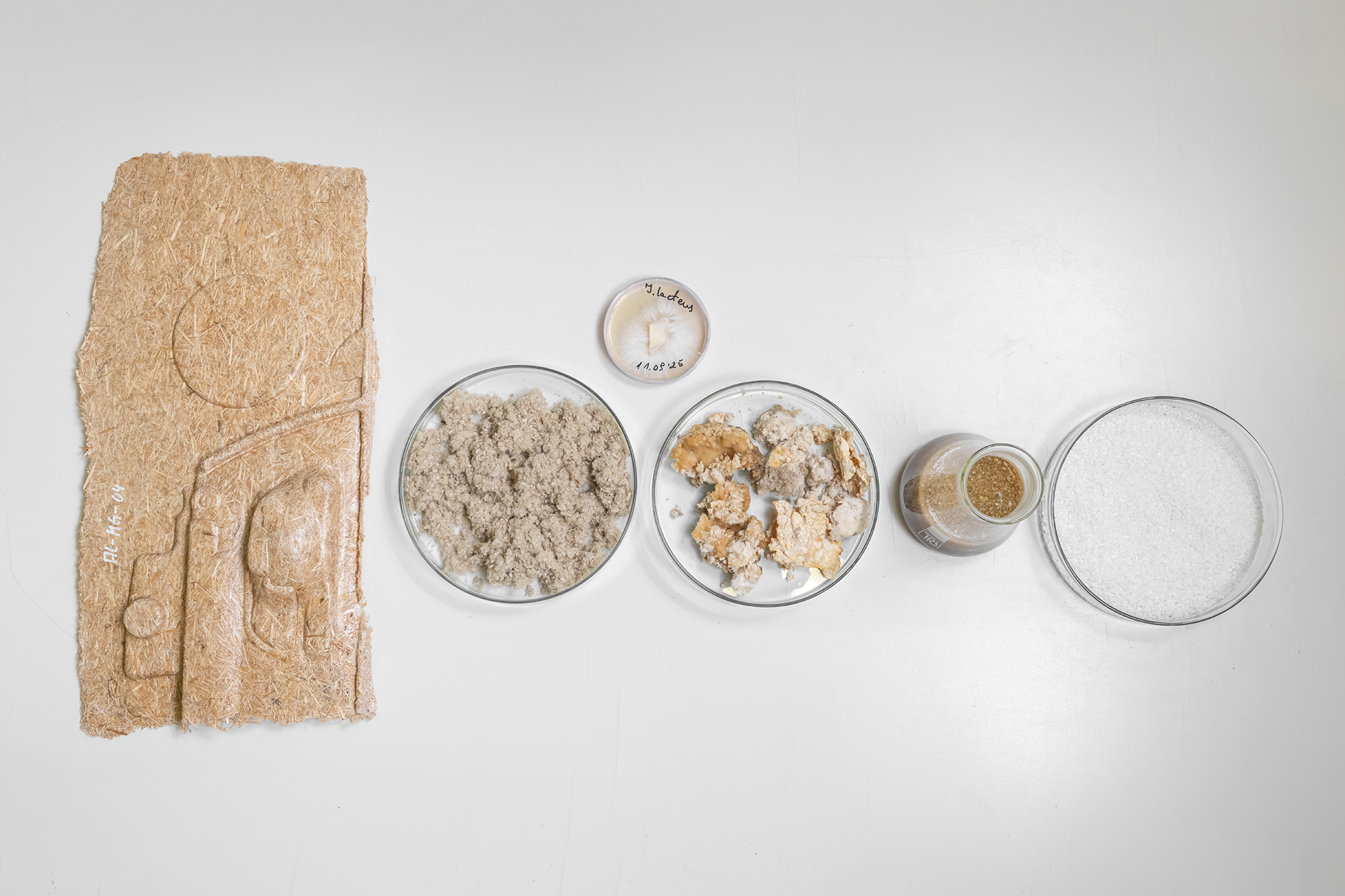
Recycling natural fiber-reinforced plastics: Closing the loop with fungi and WEIMA
Why fungi? The ecological drive
Due to stricter CO₂ regulations and growing environmental awareness, materials are increasingly being evaluated based on how well they can be recycled at the end of their life cycle. Although natural fibers are renewable, they are so firmly embedded in composite materials that they cannot be easily removed. The NFRP recycling team therefore uses white rot fungi – the same organisms that decompose dead wood in the forest. They break down the cellulose-containing fibers while leaving the plastic untouched. The resulting fungal mycelium is then liquefied into organic acids that can be used in biogas plants.


The research project in the video
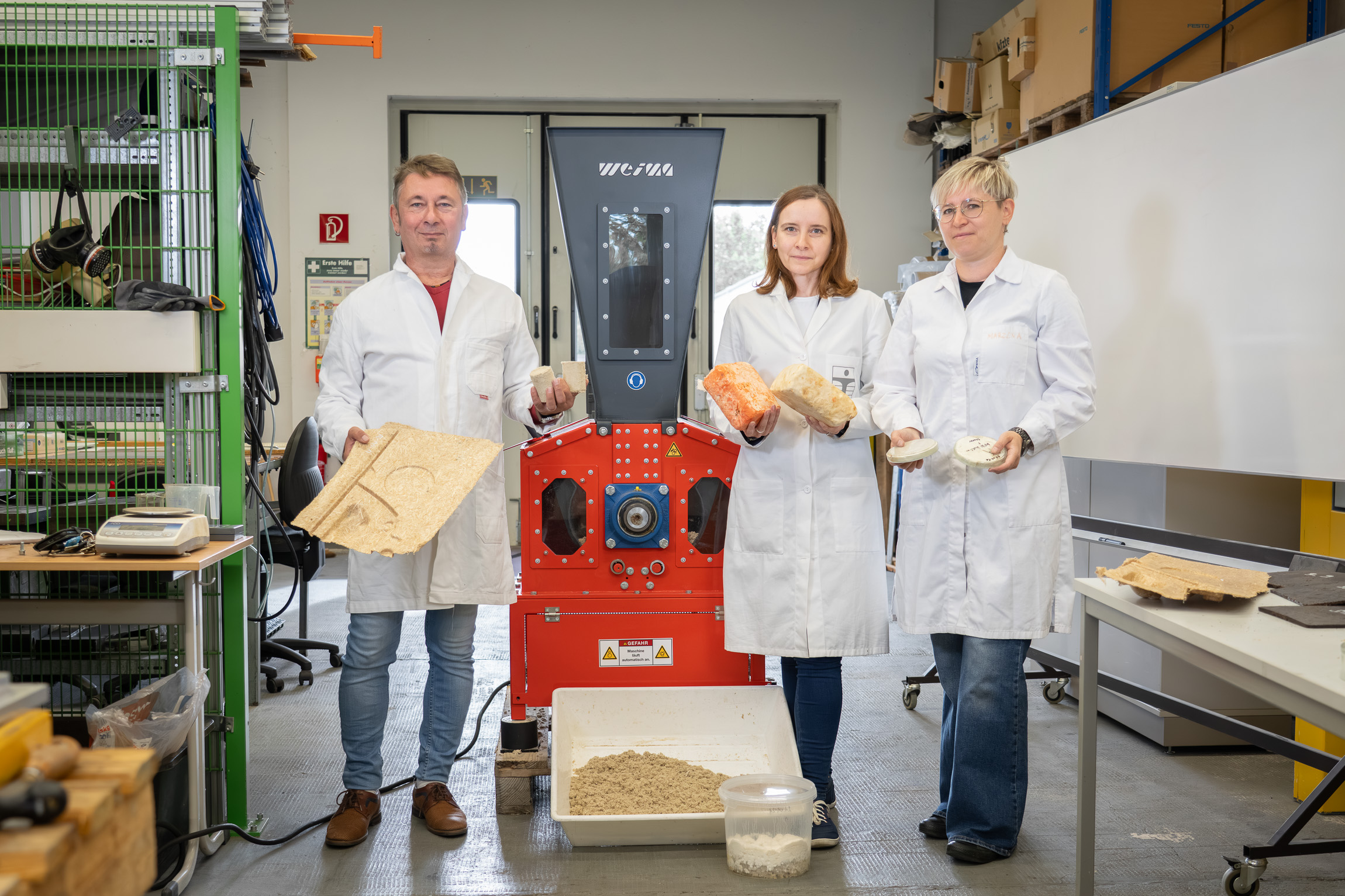
The first step: Shredding with WEIMA
In order for the fungi to reach every single fiber, the NFRP must first be shredded into pieces that are as small as possible. At the same time, energy consumption must remain low. With its Compact Shredder, WEIMA supplied a robust single-shaft shredder that offers precisely this compromise. Biotechnologist Marzena Poraj-Kobielska says that particle size and energy input are the decisive parameters. The WEIMA shredder creates a homogeneous substrate, the perfect basis for fungal growth.


Fungi as a biorefinery
The shredded NFRP pieces are sterilized and inoculated with white rot fungi. The fungi grows through the composite material and breaks down the natural fibers without affecting the polymer content. At optimal humidity and temperature, the fungal network forms a dense mycelium. Since only non-toxic, non-spore-forming species are used, handling is safe. In some cases, the fungi even form edible fruiting bodies, which can be marketed after appropriate testing.
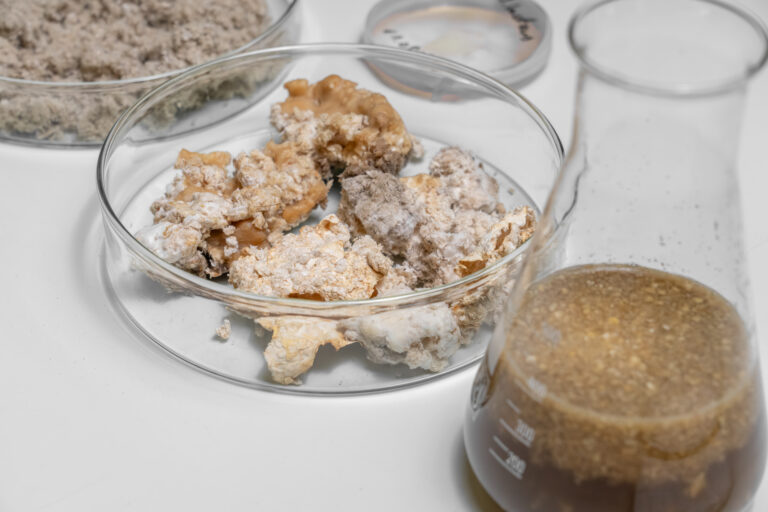
Hydrolysis and separation – the cycle closes
After fiber degradation, the pieces permeated by the mycelium are fed into a hydrolysis reactor. Water and enzymes break down the fungal biomass into organic acids. These acids can be fermented into biogas in a downstream plant, thus providing renewable energy. The remaining plastic is left as a clean solid fraction and can be processed into new composite materials or other plastic products.


The advantage of our process is that no residual materials or waste are produced. All products created become substrates for new processes, enabling us to recycle all components.
Marzena Poraj-Kobielska | Biotechnologist Zittau/Görlitz University of Applied Sciences
Partnership for global action
For the research team behind the NFRP recycling project, it was crucial to find an industrial partner with proven shredding expertise and international experience. In WEIMA, they found both requirements combined: technical expertise in the processing of sophisticated composite materials and a global sales and service network that enables the technology to be distributed beyond Saxony. Research associate Matthias Tirsch emphasizes that the process developed “should be used not only here in the region, but worldwide” – a vision that is becoming a reality through this collaboration.
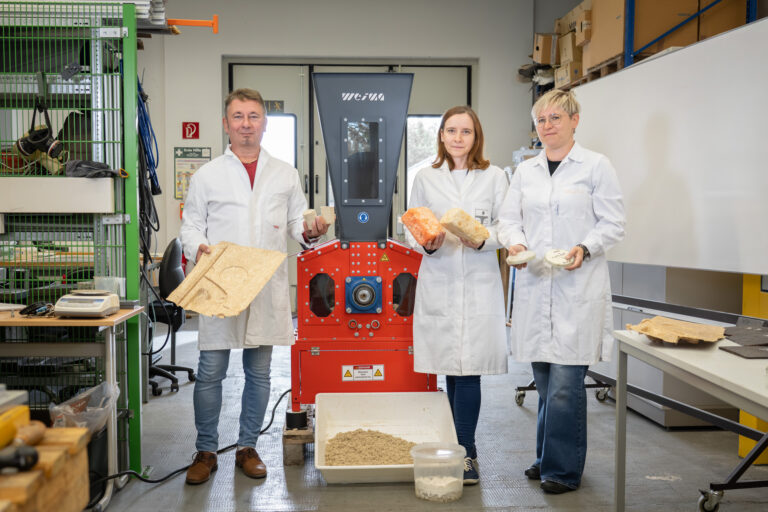
With increasing environmental regulations and rising quantities of composite materials, the NFRP recycling project demonstrates how biological processes and mechanical shredding technology can complement each other. Thanks to WEIMA shredders, which deliver a homogeneous feedstock, and fungi, which break down the organic content, natural fiber composites can be transformed from a recycling problem into a source of energy and new raw materials. The project proves that joint innovations from science and industry pave the way for a circular economy.
Sign-up for our newsletter
Newsletter
Sign-up for our newsletter and get all the latest updates in your mailbox
Sign-up for our newsletter
What are you looking for?
Explore all WEIMA solutions

